
.jpg)

Global central banks are tightening policy as rising bond yields and long-term fiscal pressures reshape the outlook for Australian investors, with implications for portfolio duration and diversification.

Synchronised global monetary tightening and shifting domestic inflation risks are driving a reassessment of bond yields and long-term borrowing costs. We examine these international market dynamics alongside Australia's latest Intergenerational Report and their implications for portfolio duration.
The domestic story last week was a shift in language rather than in rates. Appearing before the House Economics Committee on Friday, Governor Michele Bullock said the upside risks to inflation the Bank flagged in August "appear to be materialising". She also acknowledged a less comfortable trade-off between inflation and employment, which reads as a willingness to accept a slower economy in order to get inflation back into the band. Markets took the hint: roughly 90% is now priced for a rise at the end-September meeting, on top of the three already delivered this year. Australian ten-year bond yields made a round trip through the week, 5.33% on Monday, 5.41% on Tuesday, a level last seen around 2009–10, and back to 5.26% by Friday.
This is a global phenomenon even if Australia's circumstances look specific. Three other major central banks tightened last week. The Federal Reserve raised by a quarter point to 4% on a unanimous vote, revised its own inflation forecast up, and most officials now expect a further rise before Christmas; Chair Kevin Warsh said the Fed had "removed some accommodation" and would be hard-pressed to call policy restrictive. The European Central Bank had already moved, and the Bank of Japan followed on Friday, taking its rate to 1.25%. Only the Bank of England stood aside. In almost every case markets are priced for at least one more increase this year, and more beyond it.
Japan matters here more than most people outside markets would assume. Its bond market is enormous and the money that moves in and out of it is flighty. One argument is that the synchronised rise in yields across the US, Europe, Japan and Australia has been driven by hedge funds unwinding the yen carry trade: borrowing cheaply in yen, buying higher-yielding currencies elsewhere, and repeating the trick several times over. On that reading the Bank of Japan, not the Fed, is the central bank most able to move Australian bond valuations. It also explains the oddity that the yen fell after the BoJ raised rates: the hike was smaller and more divided than the market wanted, so the trade became only slightly less attractive rather than genuinely unattractive.
Monday's Intergenerational Report looks like a document about the next forty years rather than the next forty days, but it is highly relevant to what markets are digesting in the here and now. Treasury's projections rest on an assumption that the government eventually borrows at about the rate the economy grows, a ten-year bond yield converging on nominal GDP growth, roughly 4.4%, with nothing on top for risk. The market spent last week between 5.26% and 5.41%. The report is candid about the gap: borrowing a percentage point above nominal growth would add around half a percentage point of GDP to the annual deficit and nearly seven points to government debt by 2065–66. Interest payments alone are already projected to climb from 0.9% of GDP this year to 1.6% by 2032–33. There is even a box modelling a sustained one-point rise in US yields, which Treasury estimates would lift Australian government debt by about 1.5% of GDP. That is the same transmission mechanism we have been discussing, measured in decades rather than days.
The longer-term concern is that the post-pandemic credit boom may be starting to turn. A key pressure point is the US current account, which has relied heavily on large Asian surpluses being recycled into US assets. There is evidence that this recycling is slowing, while Washington is no longer providing liquidity in the same way it has during previous yield spikes. Credit booms generally become more fragile when the supply of credit is interrupted, not simply when the price of credit rises. On this view, the base case is a prolonged adjustment rather than an immediate crisis: a controlled outcome could see the US ten-year bond yield around 5.25%, while a more disorderly outcome would be above 6%. We have accordingly made a modest increase to duration in the Flagship models and are discussing the same question with bespoke clients. The arithmetic is relatively favourable for an Australian investor, because our short rates sit above US rates and hedging the currency back currently adds around half a percentage point a year rather than creating a cost.
Two things are worth considering. The first is about 'what's in the price'. Widely anticipated rate rises were delivered and long yields still finished the week little changed or lower than they started, much of a rise is in the price well before it happens. On a longer horizon stubborn inflation has been priced into bonds which is exactly why they have performed poorly and might not if inflation expectations now moderate and/or economic growth weakness. That leads into the second point about diversification in investing and in life, the Treasuries Intergenerational Report is calling out that from this point on the sums get harder for Australia and its inhabitants until the post-commodity boom productivity gap is resolved. That means that individuals and businesses as well as the government have to be a bit more thoughtful and nimble than in an environment where falling bonds were underwriting gains across the board and cash was pouring into finance more holes in the ground. No doubt Thursday's labour force figures, the RBA decision at month-end and the August inflation release the day after will provide some more small clues to the intergenerational investing puzzle.
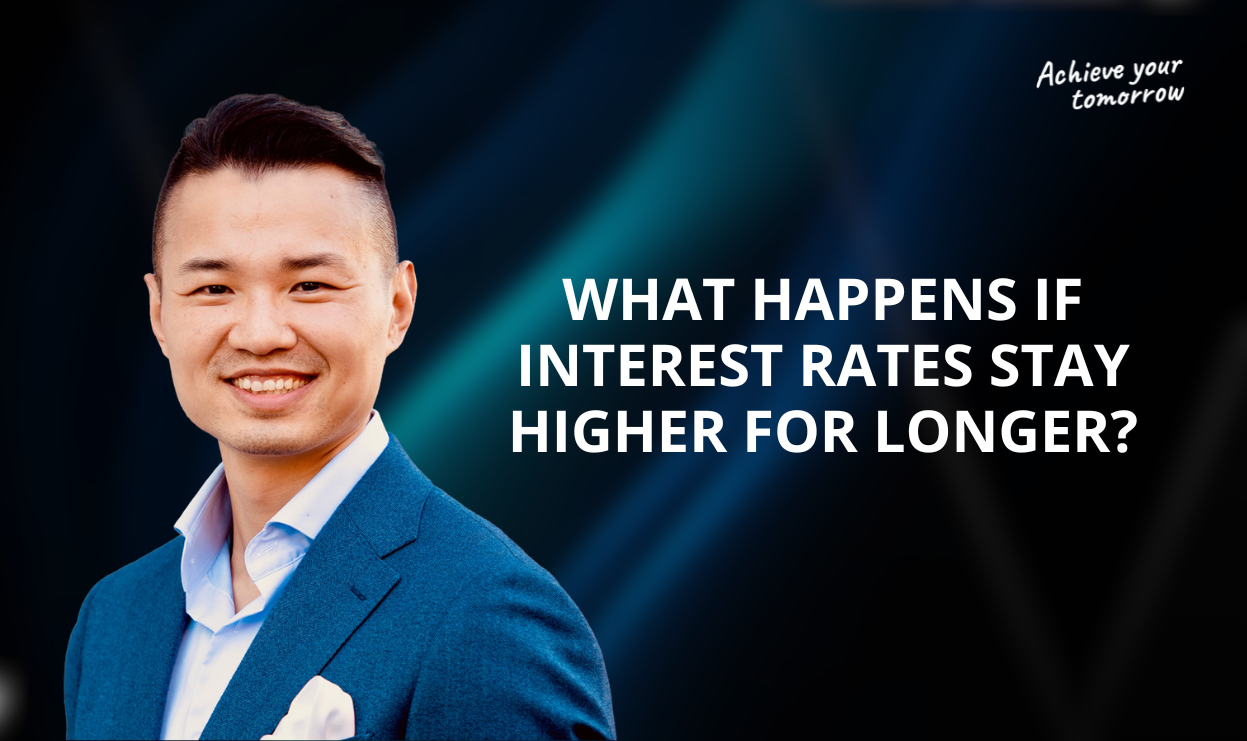
Interest rates affect far more than mortgage repayments. Learn how a prolonged period of higher rates could impact your investments, retirement plans, property and long-term financial strategy.

Proposed changes to discretionary trust taxation could affect Australian business owners, investors and family trusts from 2028. Learn what has been proposed, who may be impacted and the key considerations before taking action.
.png)
This edition’s Staff Spotlight gives us the opportunity to learn a little more about Tristan Borg, our Associate Financial Adviser based in our Beaumaris office.
Stay in the know with the latest updates, insights, and exclusive content delivered straight to your inbox.
